Soft Skills and School: Between Theory and Practice
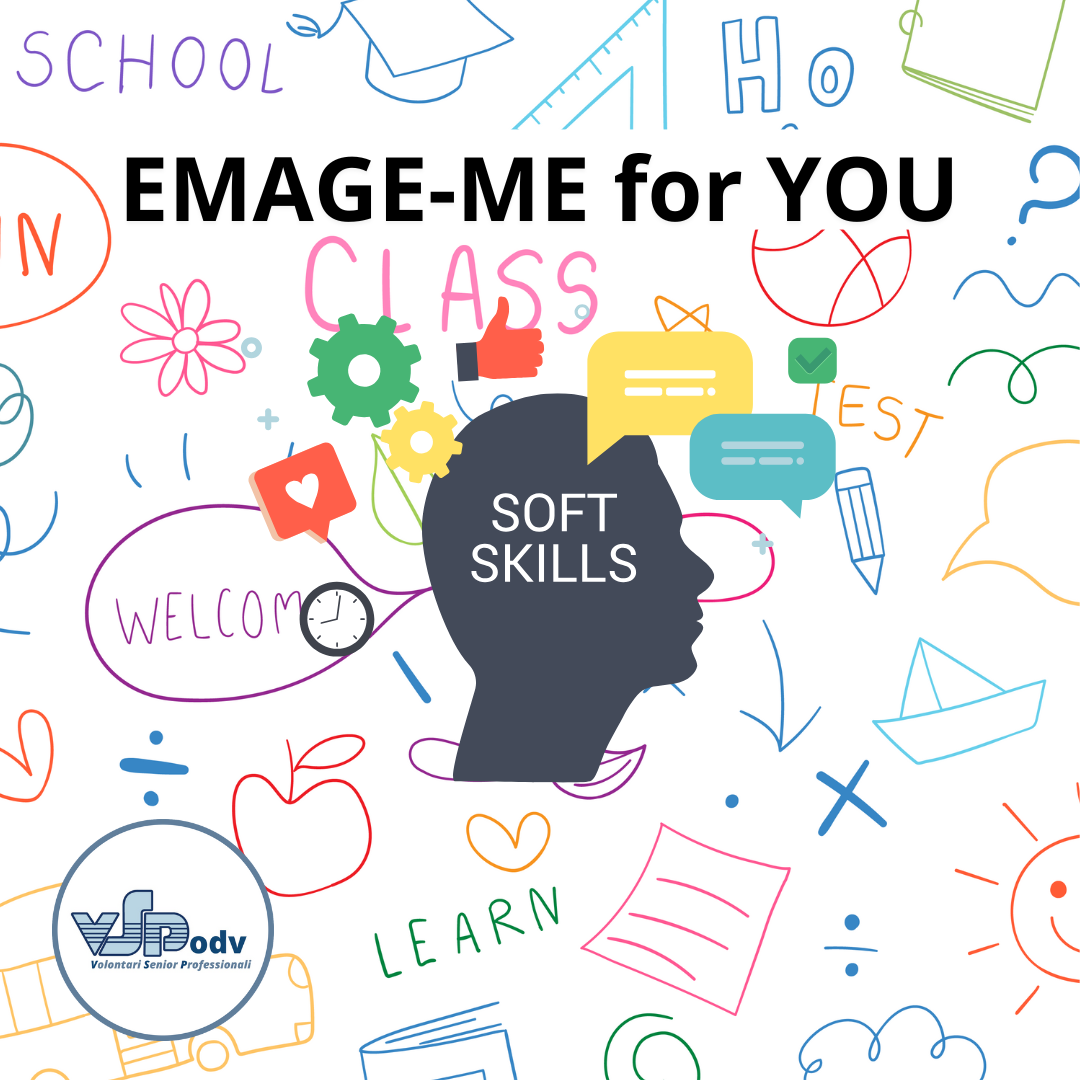
Liceo Domenico Berti in Turin, in collaboration with VSP (Senior Professional Volunteers), has introduced a new experimental educational path called “EMAGE-ME for YOU” for the development of soft skills (also known as transversal skills), which leverages the potential of the “emage-me” smartphone app as a support technology for teachers and students.
Soft skills: which ones are they, and which are truly necessary?
The set of soft skills to be cultivated is evolving and is naturally tied to the evolution of the contemporary world and its new challenges. The ability to work in a team, to manage emotions, or to solve complex problems seems to be fundamental—yet these are not the only important skills.
Here are some key elements to consider:
- The importance of socio-emotional skills:
The ability to work in a team, communicate effectively, and manage emotions is crucial in all areas of life. These skills allow young people to build healthy relationships, resolve conflicts, and adapt to different contexts. - The value of critical thinking and problem solving:
In a rapidly evolving world, it is essential for young people to be able to analyze information, evaluate options, and find innovative solutions. Developing critical thinking and the ability to solve complex problems will prepare them to face future challenges. - Adaptability and flexibility:
The job market is constantly changing, so young people must be ready to learn new skills and adapt to unexpected changes. In any case, flexibility and adaptability will be key for their personal growth.
All this aligns with the key competences for lifelong learning defined by the European Union, which include literacy competence, multilingual competence, mathematical competence and competence in science, technology and engineering, digital competence, personal and social competence and the ability to “learn to learn,” citizenship competence, “entrepreneurial” competence, and competence in cultural awareness and expression.
It is undeniable that the soft skills identified by the EU are fundamental for the personal and professional growth of young people, and it is important to build on these to enrich educational paths that must prepare young people for a fast-changing future.
Integrating Soft Skills into School
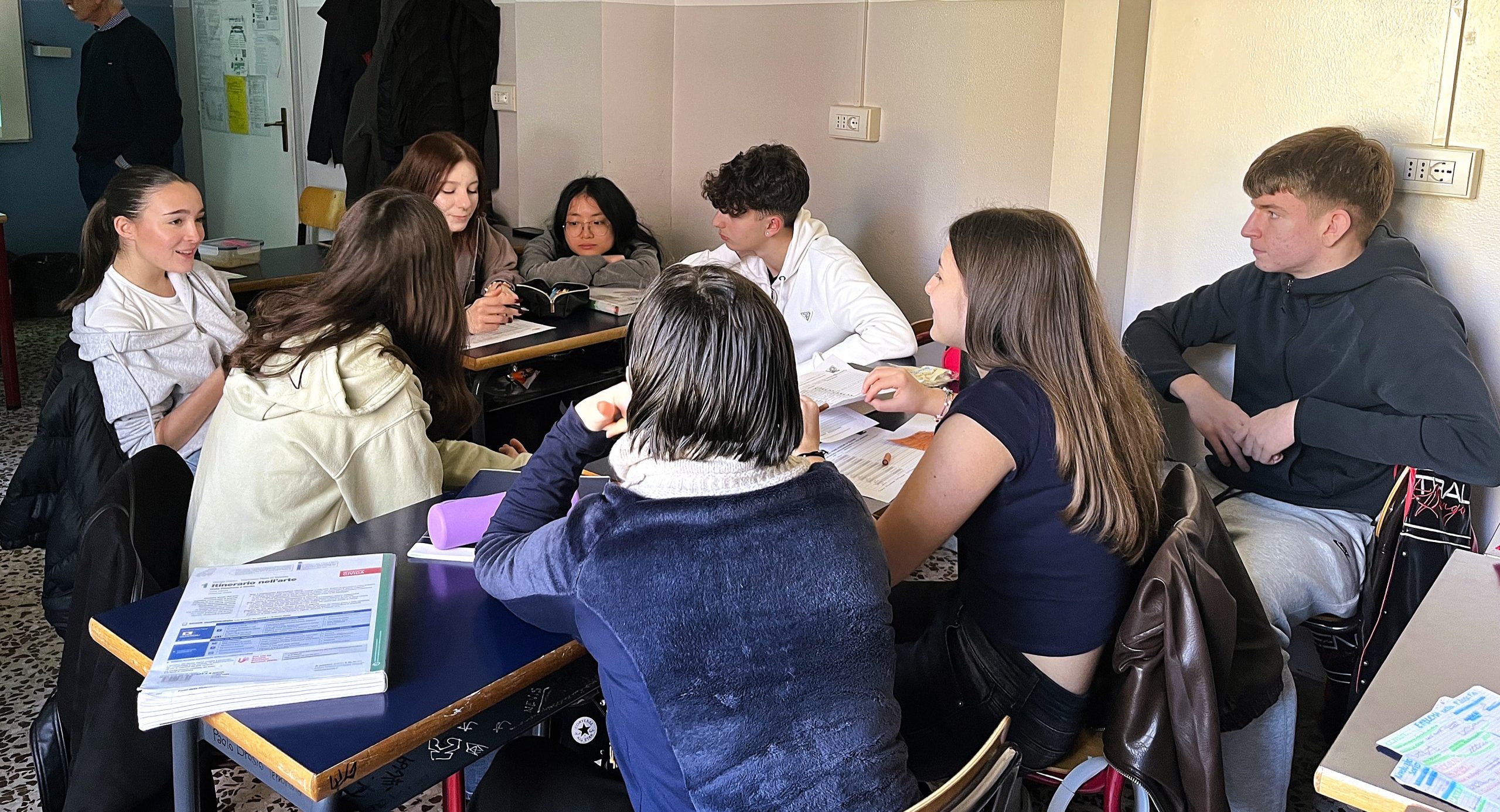
In everyday practice, schools face the challenge of developing and assessing soft skills in a structured way. While school curricula do foresee the acquisition of these skills, it is not always clear how to encourage their learning during hours dedicated to disciplinary content.
Professor Andrea Degrandi, PCTO/Orientation Coordinator at Liceo Domenico Berti, emphasizes the importance of defining clear and shared procedures for integrating soft skills into teaching and self-assessment, through targeted intervention schedules and shared evaluation tools.
Learning environments should be designed to also promote the development of soft skills such as collaboration, communication, and critical thinking; activities such as group projects, debates, and simulations can be used to cultivate these skills. In this context, innovative and reliable assessment tools such as digital portfolios, apps, and online platforms that allow for tracking student progress in this area can be extremely helpful.
The collaboration between schools and companies, organizations, and professionals also offers students opportunities for practical learning and contact with the professional and work world.
Educational programs like EMAGE-ME for YOU, supported by tools like the emage-me smartphone app, could play a decisive role in making the work of orientation “tutors”—who have been guiding high school students for about two years—more efficient.
The uniqueness of this educational path and app is that it allows students to reflect on the skills they have acquired or need to acquire through feedback received and potentially shared; and it allows tutors to access a complete and in-depth overview of students’ soft skills, associated with their progress from the third to the fifth year.
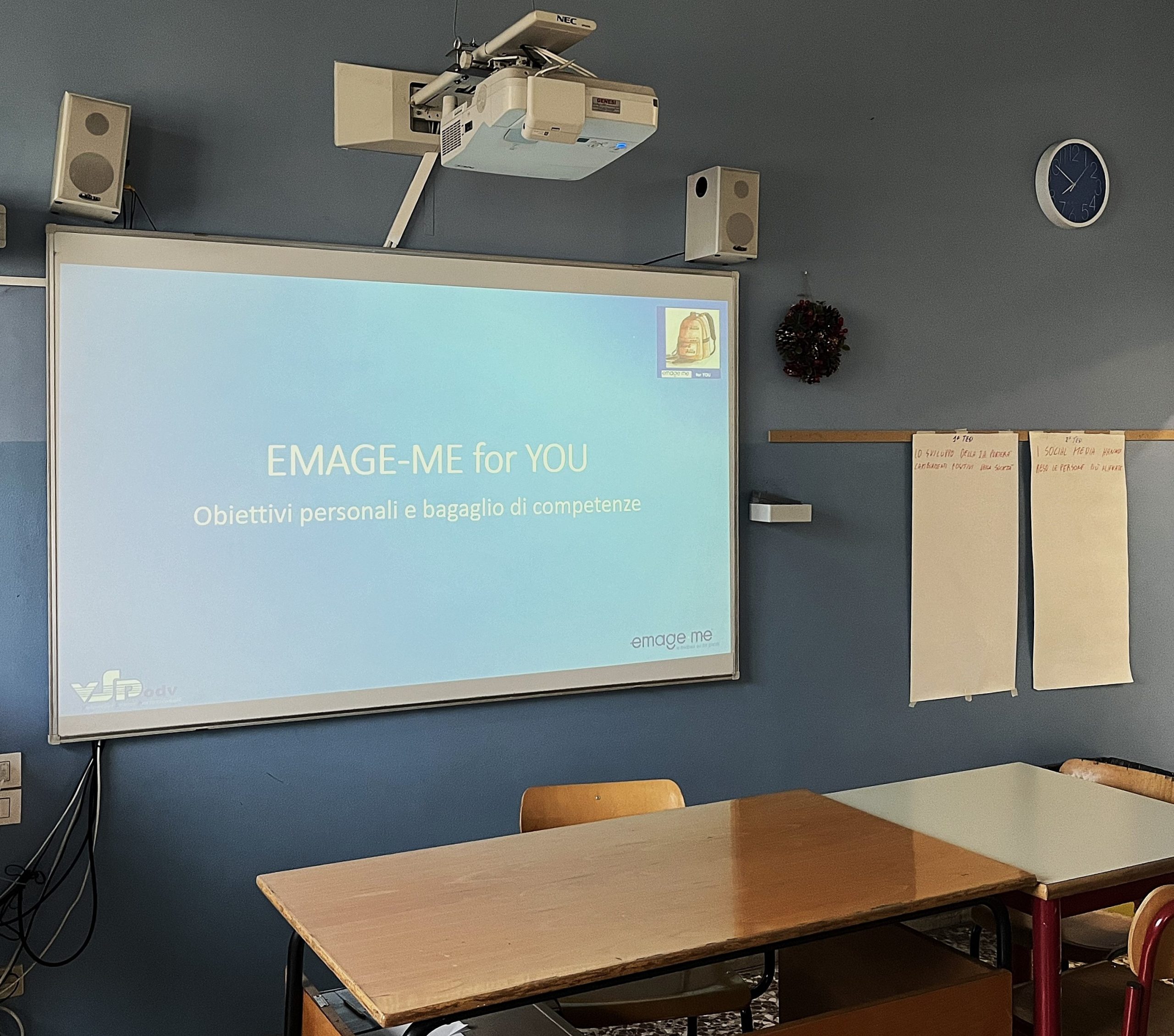
The EMAGE-ME for YOU Educational Path and the Use of the Emage-me App: A Tool for Self-Assessment of Skills
To meet this need, five classes from Liceo Berti began experimenting with emage-me, a smartphone app from the French tech company of the same name that, through targeted tests and analyses, helps outline students’ personality traits and soft skills.
The school, in collaboration with the VSP (Volontari Senior Professionali) association of Turin, developed the EMAGE-ME for YOU path composed of three sessions based on active learning. It is designed above all to engage students in teamwork activities to develop critical thinking, discussion and negotiation skills, reflection after team activities, and the ability to give and receive feedback.
Teachers, as tutors, and VSP volunteers, as soft skill trainers, will guide students in the use of emage-me. The introduction of this tool within a specific third-year educational path, followed by its use during the fourth and fifth years, could represent a first step toward integrating an innovative and structured method for self-assessment of soft skills, allowing students to gain greater awareness of their abilities and areas for improvement. At the end of the educational path, the results obtained through emage-me, alongside students’ reflections and evaluations from teamwork activities, will be discussed in the third and final classroom session, during which students will have the opportunity to reflect on their skill profiles and identify strategies for development.
The initiative by Liceo Berti is a concrete example of how schools can innovate their assessment methods by integrating digital tools and collaborations with external organizations. The goal is to provide students with more complete and conscious preparation, aligned with the needs of contemporary society. The use of applications like emage-me, paired with specific training paths and associations capable of engaging students and tutors thanks to their real-world experience, offers a way to activate both students in self-assessment and reflection, and tutors in obtaining a broader picture of transversal skills—through external collaborators and tools developed by experts.
The EMAGE-ME for YOU project also represents a training opportunity for tutors themselves, helping to strengthen a culture of skills and reflection.